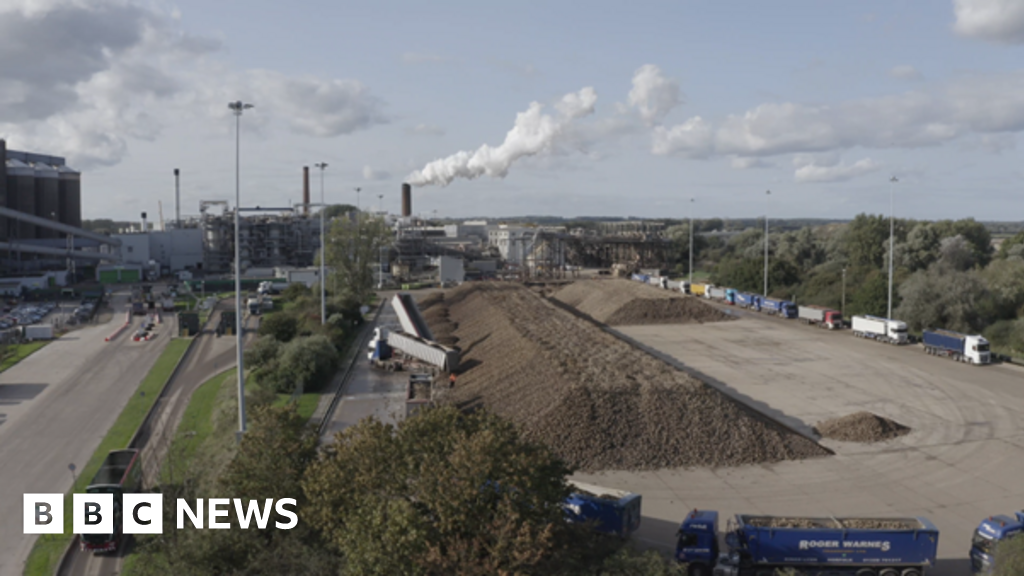
A Century of Sweet Success: The Evolution of Wissington Sugar Factory
The iconic steam plume rising from British Sugar’s
Wissington Sugar Factory is more than just a seasonal reminder of the annual sugar beet campaign; it’s a symbol of enduring innovation and regional significance. For nearly a century, this industrial landmark in West Norfolk has evolved from a humble processing plant into the UK's largest and one of Europe's most efficient sugar producers.
Established in 1925, the Wissington site initially processed a modest 600 tonnes of sugar beet daily, with deliveries arriving primarily by rail or barge. Fast forward to today, and the factory now slices more sugar beet in a single hour than it did in an entire day back then, with daily processing figures soaring to approximately 20,000 tonnes. This incredible growth underscores a relentless pursuit of efficiency and scale that cemented Wissington's position at the forefront of the industry.
Supported by around 800 dedicated local growers, the factory annually transforms three million tonnes of sugar beet into approximately 400,000 tonnes of high-quality sugar. But the story of
Wissington Sugar Factory is far more comprehensive than just sugar production. It operates on a sophisticated circular economy model where virtually nothing goes to waste. For every tonne of sugar produced, a mere 200 grams of residue remains – an astonishing feat of sustainable manufacturing. This commitment ensures that every root of beet is utilised, generating a diverse array of value-added co-products for sectors ranging from agriculture and pharmaceuticals to transport and energy. For a deeper dive into the factory's long history and impressive scale, explore
Wissington Sugar: 100 Years of UK's Largest & Most Efficient Factory.
A pivotal moment in Wissington's history came in 1971, with the culmination of a three-year, £10 million reconstruction and expansion project. This massive investment was part of a broader rationalisation strategy by the British Sugar Corporation, aimed at optimising processing seasons and supply chains. The redesigned factory facilitated a much quicker turnaround for beet-laden lorries from a 30-mile radius, contributing significantly to its long-term efficiency and cementing its role as a central hub as smaller, less efficient factories were consolidated. This foresight also anticipated the UK's potential entry into the European Economic Community (EEC) and the changing dynamics of global sugar supply.
Nurturing the Next Generation: Wissington's Commitment to Talent Development
While technological advancements and operational efficiency are hallmarks of the
Wissington Sugar Factory, its true strength lies in its people. With around 250 individuals on-site today, including permanent employees, resident contractors, and seasonal workers, a diverse range of roles, skills, and expertise is essential to manage the complex operations and varied product lines.
At the heart of Wissington's talent strategy is its highly regarded apprenticeship scheme. This programme has consistently provided a vital channel for new talent, offering robust development pathways year after year. The company's dedication to nurturing its workforce is evident in the fact that many members of the site’s leadership team are former apprentices themselves. This organic growth within the organisation fosters a deep understanding of the factory's unique challenges and opportunities.
Perhaps the most compelling testament to the scheme's success and the company's vibrant culture is the astonishing retention rate: on average, more than 80% of apprentices choose to remain with British Sugar for at least ten years. In an ever-evolving industrial landscape, such loyalty and long-term commitment are truly remarkable. This not only ensures continuity of knowledge and skills but also creates a stable, experienced workforce that drives continuous improvement and innovation.
For other businesses looking to cultivate similar success, Wissington’s model offers valuable insights:
- Invest in Structured Development: Apprenticeships are not just entry-level jobs; they are comprehensive training programmes designed to build skilled professionals.
- Promote from Within: Showcasing a clear career path, where apprentices can ascend to leadership roles, motivates new talent and retains experienced staff.
- Foster a Supportive Culture: High retention rates are often a reflection of a positive working environment, fair treatment, and a sense of belonging.
Beyond the factory gates, the team at Wissington is deeply passionate about the local community. Recognising its integral role in the West Norfolk way of life, the factory actively encourages volunteering, giving back through charitable donations, and fundraising for local good causes. This dedication to both its internal workforce and the external community reinforces Wissington's status as a responsible and valued corporate citizen.
Pioneering a Sustainable Future: Wissington's Decarbonisation Vision
The journey of the
Wissington Sugar Factory is not just about producing sugar efficiently; it's about pioneering sustainable industrial practices for the future. As a key player in the UK's industrial landscape, Wissington has long embraced environmental responsibility, exemplified by its commitment to the circular economy and its groundbreaking initiatives in renewable energy.
A landmark achievement in Wissington's sustainability efforts was the opening of the UK’s first bioethanol plant in 2007. This state-of-the-art facility can produce up to 75 million litres of bioethanol annually, much of which is sold as E10 fuel at forecourts across the country. Bioethanol offers a tangible way to reduce carbon emissions from transport, contributing significantly to national climate targets. This innovation showcases how traditional industries can adapt and diversify to support a greener economy.
The factory's overarching circular economy model plays a critical role in its sustainability narrative. By ensuring that every part of the sugar beet is utilised to create co-products for various industries, Wissington minimises waste and maximises resource efficiency. This approach not only reduces environmental impact but also creates new revenue streams and supports other sectors. For more details on its circular economy leadership and bioethanol production, refer to
Wissington: UK's Circular Economy Leader & Bioethanol Pioneer.
Looking ahead, the commitment to sustainability at
Wissington Sugar Factory is unwavering. Despite operating almost 24/7, 365 days a year, the team is constantly seeking new innovations and efficiency improvements. Crucially, a huge decarbonisation project is currently underway. While specific details of the project may involve various strategies – from transitioning to renewable energy sources for its massive power demands, optimising heating and cooling processes, or even exploring carbon capture technologies – the very undertaking signifies a profound commitment to reducing its carbon footprint.
Decarbonising an industrial site of Wissington's scale is a complex challenge, but it positions the factory as a leader in sustainable manufacturing. It demonstrates that economic success and environmental stewardship are not mutually exclusive but can, in fact, be deeply intertwined.
Wissington's Enduring Legacy: Community, Economy, and Innovation
Reaching its centenary is a momentous achievement for the
Wissington Sugar Factory, a testament to its resilience, adaptability, and forward-thinking vision. For generations, it has been a cornerstone of the West Norfolk economy, providing stable employment, supporting hundreds of local farming families, and fostering a strong sense of community pride.
The factory's influence extends far beyond its direct employees and the growers it serves. Its operations create a ripple effect, supporting logistics companies, maintenance providers, and various other local businesses. This deep embedding within the local economy means that Wissington’s success is intrinsically linked to the prosperity of the region.
The continuous drive for innovation is another defining characteristic of Wissington. From its early days of rail and barge deliveries to becoming a bioethanol pioneer and now embarking on a major decarbonisation project, the factory has consistently embraced change. This proactive approach ensures its relevance and competitiveness in a rapidly evolving global market. The team understands that resting on past achievements is not an option; constant evolution is key to another century of sweet success.
In essence, Wissington Sugar Factory is a microcosm of industrial excellence:
- Economic Driver: A significant employer and supporter of local agriculture.
- Technological Innovator: Consistently adopting and pioneering advanced processing methods.
- Environmental Steward: A leader in circular economy principles and decarbonisation efforts.
- Community Pillar: Deeply engaged and invested in the well-being of its local area.
Conclusion
The
Wissington Sugar Factory stands as a powerful example of how an industrial landmark can thrive for a century, not just by producing a vital commodity, but by nurturing talent, embracing innovation, and pioneering sustainable practices. From its humble origins to its current status as a European leader in efficiency and environmental responsibility, Wissington continues to demonstrate that a business can be both economically prosperous and socially and environmentally conscious. As it looks towards its next century, with ambitious decarbonisation projects underway, the future for this venerable sugar factory looks exceptionally sweet.